
Rathfinny Vineyard Tour and Wine Tasting in East Sussex
Tucked away among the rolling hills of the South Downs near Alfriston, Rathfinny Wine Estate is one of Sussex’s, if not England’s, most impressive vineyards.
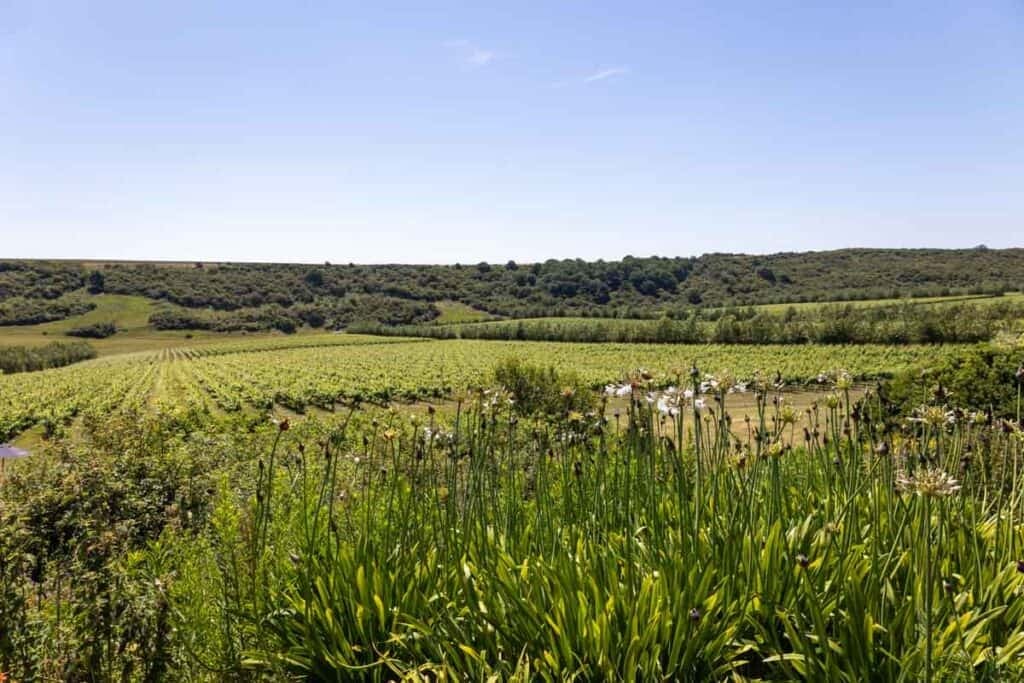
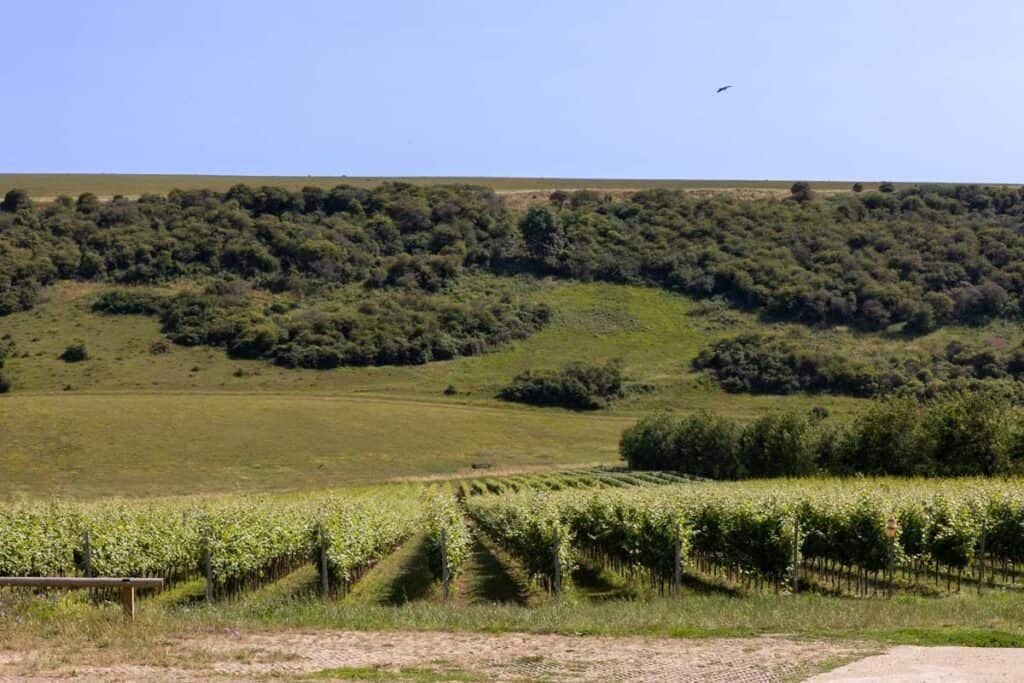
Despite having driven along the road past Alfriston countless times over the years, it still amazes me that such an expansive vineyard lies hidden beyond the treeline. Follow the long drive into the estate and the landscape gradually opens up to reveal row upon row of vines sweeping down towards the English Channel.
Disclaimer: My wine tour at Rathfinny was a hosted experience. However, all views, opinions and love of a Sussex Sparkling wine are entirely my own.
This post may contain affiliate links, which means that we may earn a small commission, at no extra cost to you, for qualifying purchases. More info: disclosure.
I first visited the estate ten years ago and was well overdue for a return visit to enjoy a Rathfinny vineyard tour and wine tasting. I was looking forward to spending a couple of hours exploring the vines, learning how the single-site estate’s Sussex sparkling wines are produced and, of course, tasting some of their fabulous wines. And the weather for our visit was absolutely glorious.
If you’re interested in English wine, looking for an unusual day out in Sussex or simply fancy spending an afternoon surrounded by vines and beautiful South Downs scenery, a visit to Rathfinny is well worth adding to your list.
There’s also lots to do nearby if you’d like to make a short break or weekend of your visit.
Rathfinny Wine Estate
Rathfinny Wine Estate was established in 2010 by Mark and Sarah Driver, who set out to create a world-class English sparkling wine estate here in East Sussex. The first vines were planted in 2012.
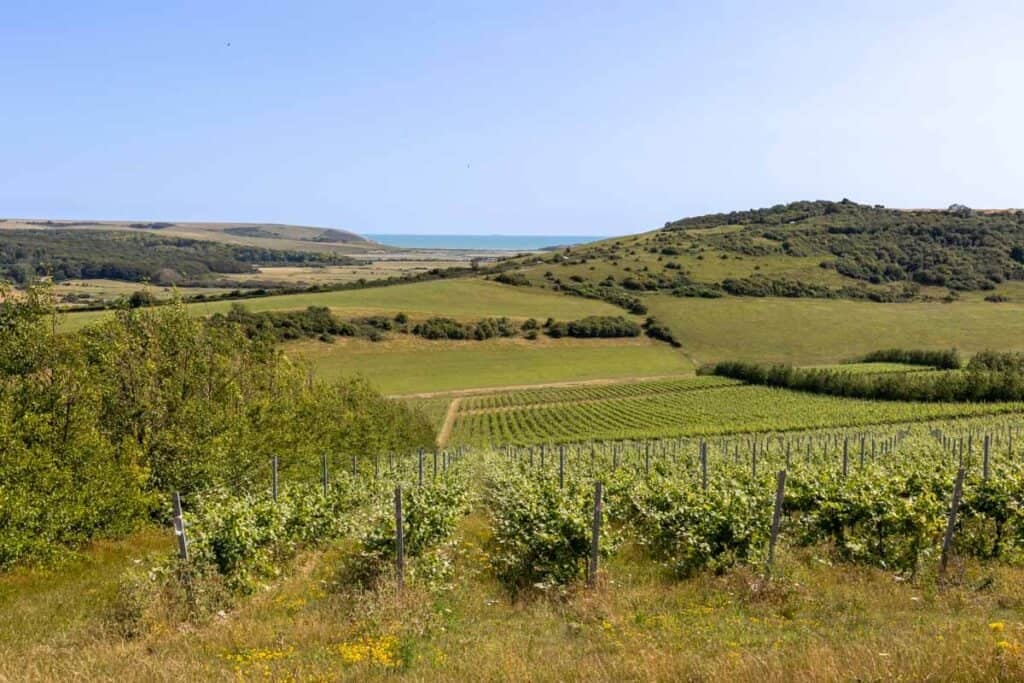
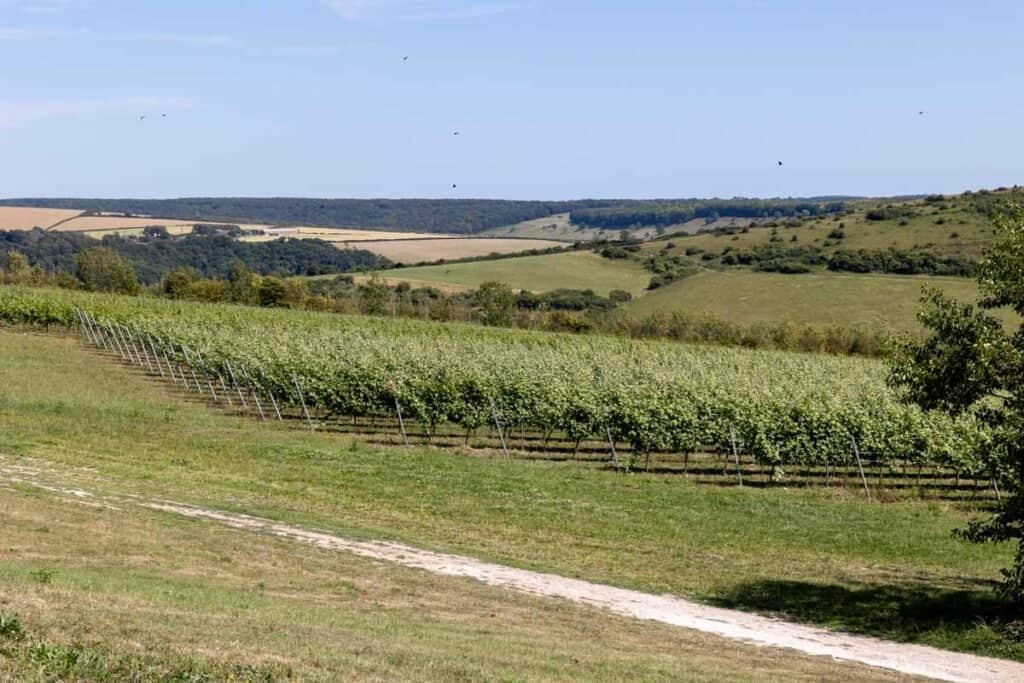
The estate occupies a beautiful position within the South Downs National Park, with the vineyard planted across rolling, south-facing slopes just a few miles from the English Channel.
Chalky soils, a temperate climate and the vineyard’s 3-mile proximity to the coast combine to create favourable conditions for growing grapes for traditional-method sparkling wine. The Romans supposedly said the perfect place to grow grapes is three miles from the sea. How right they were.
Rathfinny grows the three principal grape varieties associated with sparkling wine production: Chardonnay, Pinot Noir and Pinot Meunier. They produce both still and sparkling wines.
The estate has grown considerably since the first vines were planted and today the vineyard stretches across the Downs in regimented rows that seem to disappear into the distance.
Arriving at Rathfinny Vineyard
The drive into Rathfinny gives you your first sense of the scale of the estate.
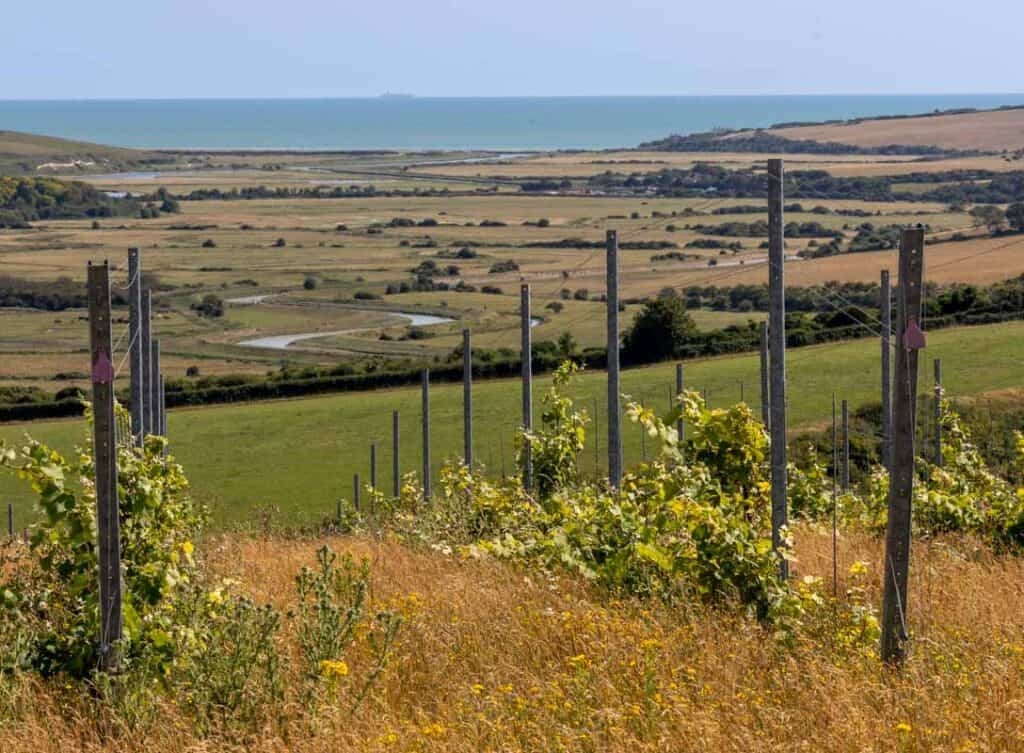
As the road climbs through the landscape, the views open up across the South Downs. On a clear day, you can see the English Channel sparkling in the distance and the ox-bow bends of the Cuckmere river which flows towards it.
Natural grassland, wildflowers and patches of woodland gradually give way to carefully planted rows of vines sweeping across the valley.
It’s a beautiful introduction to the estate and one of those moments when you realise just how impressive Rathfinny is.
There is parking close to the Winery, Cellar Door and Tasting Room which is where our vineyard tour began.
Rathfinny Vineyard Tour
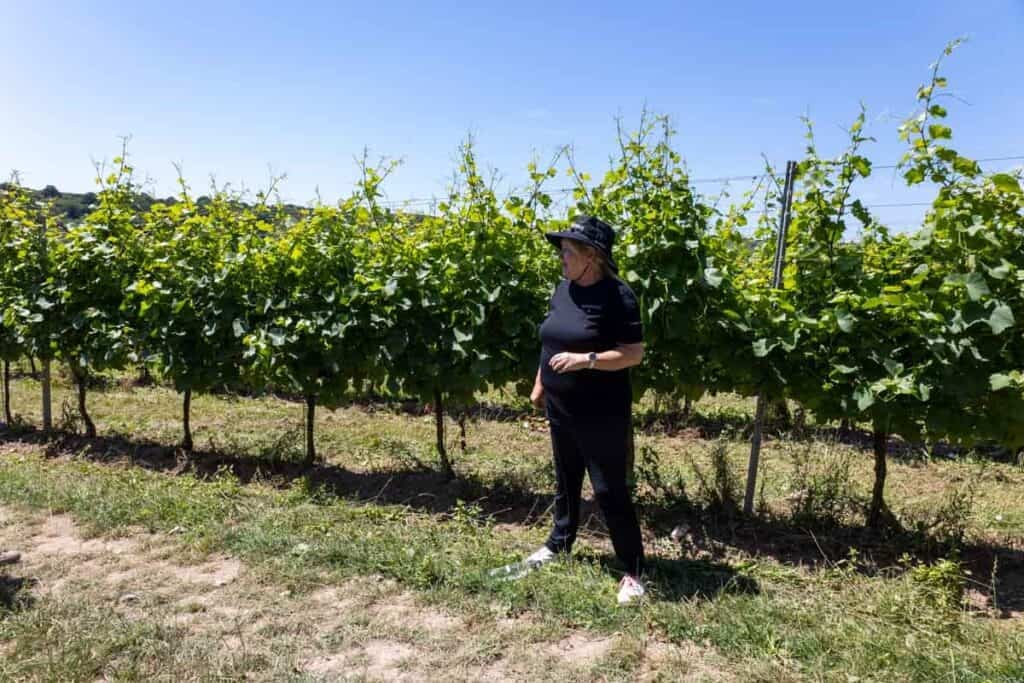
Our guided tour started with an introduction to the history of Rathfinny and the story behind the estate.
From there, we headed out into the vineyard to learn more about the landscape, the vines and why this particular corner of East Sussex is so well suited to wine production.
Walking through the vines gives you a much better understanding of the scale of the vineyard.
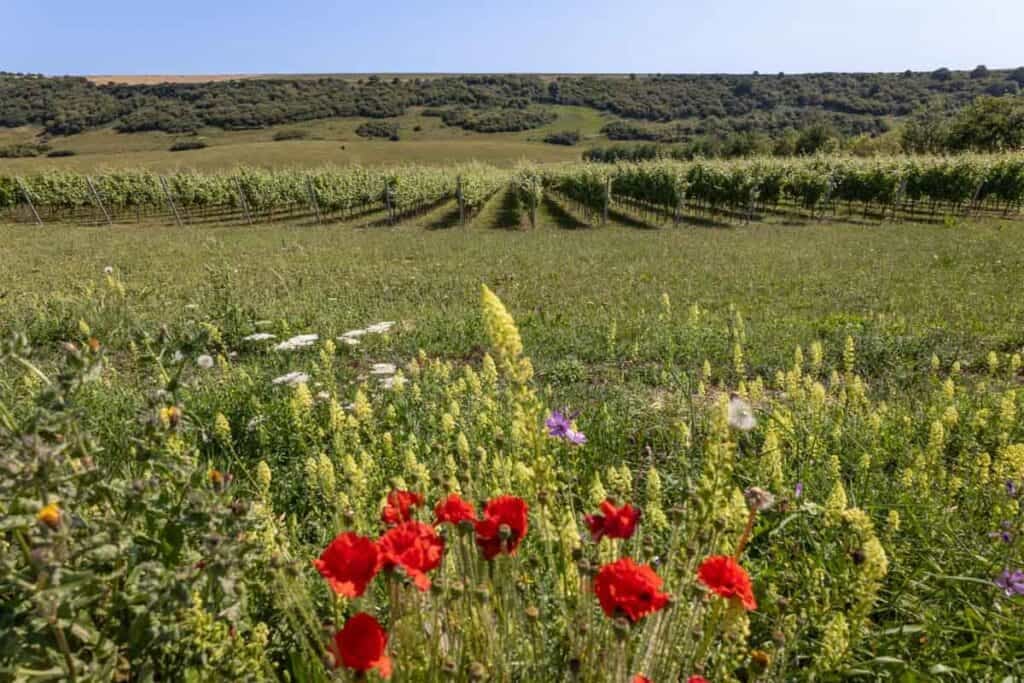
The vines are planted in long, precise rows across south-facing slopes, creating some wonderful views across the estate. Wild flowers are allowed to thrive which makes for some gorgeous scenery.
Our guide, Sarah, explained how the position of the vineyard, its chalk soils and the influence of the nearby English Channel all contribute to the growing conditions.
The chalk holds water so the vines don’t have to reach too far down and can put more energy into the important bit – growing grapes. The sea protects the site from spring frosts and sea breezes keep the grapes clean and fresh during the growing season.
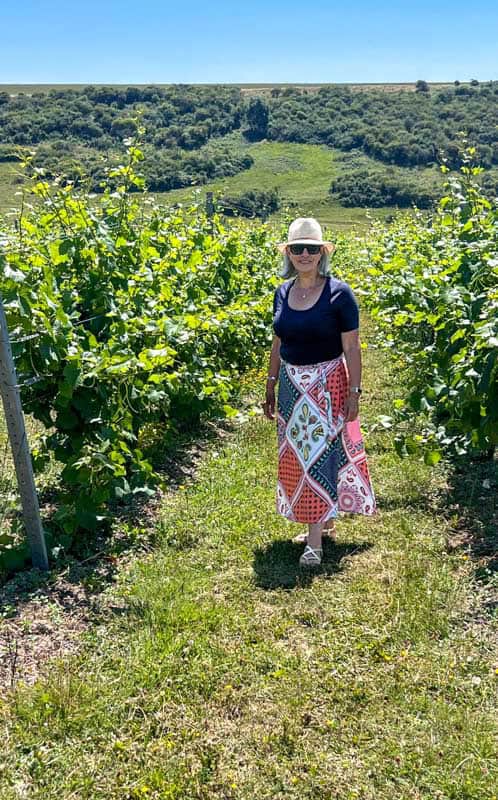
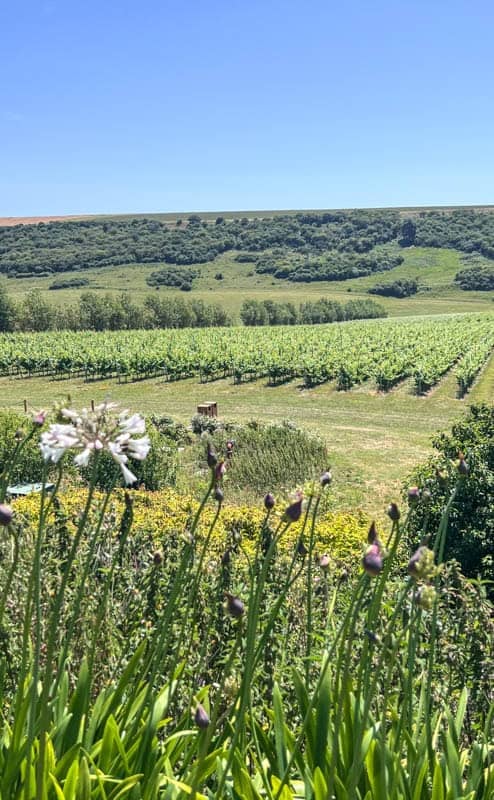
Despite having been on countless vineyard tours I still learnt something new. I didn’t realise that vines are wind pollinated and that the windbreaks planted between fields of vines help with this along with protecting the vines.
Different grape varieties are planted in different areas of the vineyard according to the soil, elevation and conditions.
The main varieties grown at Rathfinny are Chardonnay, Pinot Noir and Pinot Meunier, the traditional grapes used to produce sparkling wine.
One of the details I remembered from a previous visit was the extraordinary precision with which the first vines on the estate were originally planted.
GPS-guided machinery was used to create incredibly straight rows of vines across the slopes. Viewed from higher points around the estate, the regimented lines stretching across the landscape are quite a sight.
Inside the Rathfinny Winery
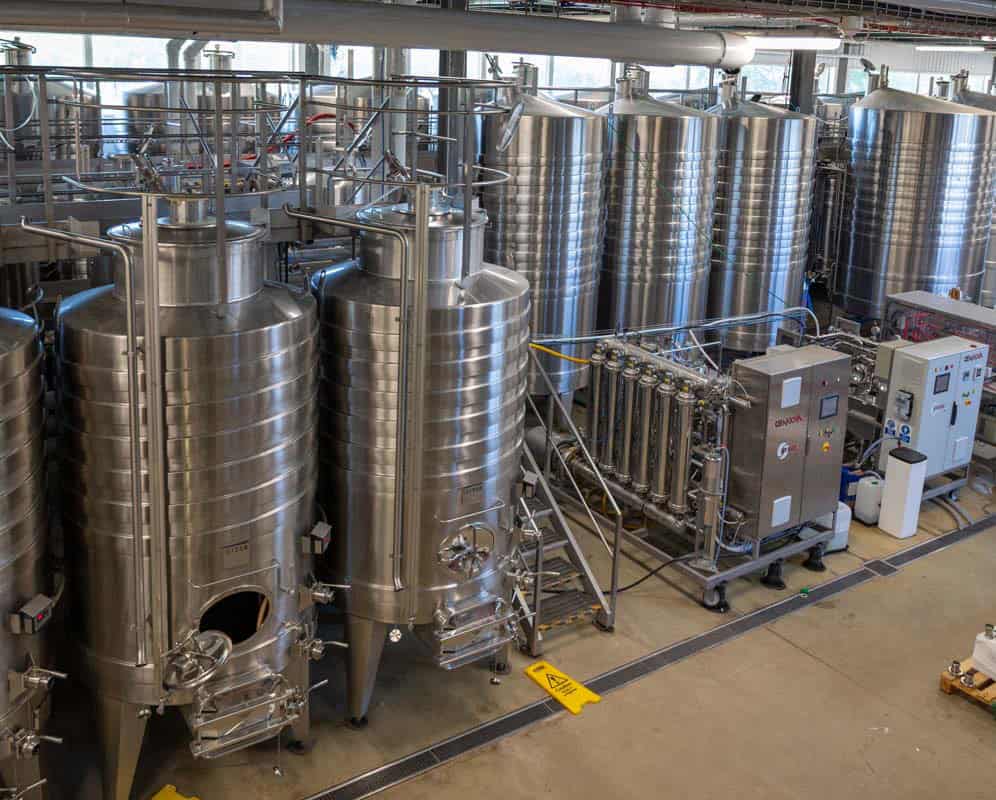
After exploring the vineyard, our tour continued inside Rathfinny’s winery. The state-of-the-art building was designed to sit comfortably within the surrounding South Downs landscape.
Its curved roof follows the contours of the hills and is planted with wildflowers, helping the winery blend into its surroundings. From the hill behind it completely blends into the landscape.
Sustainability has been incorporated into the design and operation of the Rathfinny estate, with measures including solar energy and water recycling. Water is sourced from two bore holes on the estate. And I was pleased to learn that Rathfinny is B-Corp certified.
Inside, we were taken through the different stages involved in turning grapes grown just metres away into bottles of delicious Sussex sparkling wine.
From the grape presses to the fermentation tanks and cellars, the tour gives a fascinating insight into the amount of work, time and expertise that goes into every bottle. We were educated about riddling, dosage and disgorging and other wine-making processes.
For anyone who enjoys wine, it’s particularly interesting to see the production process before sitting down to taste the finished result.
Rathfinny Wine Tasting

The final part of our tour was, naturally, the part we were looking forward to most, the wine tasting.
Having walked through the vineyard and seen behind the scenes in the winery, tasting the wines feels like the perfect conclusion to the experience.
Sarah talked us through each wine, explaining the grape varieties, production methods and characteristics to look out for. We started with a still wine, a Cradle Valley Chardonnay before moving on to the sparkling wines.
Even if you don’t know a great deal about wine, the tasting is relaxed and accessible. There’s no expectation that you should be able to identify every aroma or flavour in your glass.
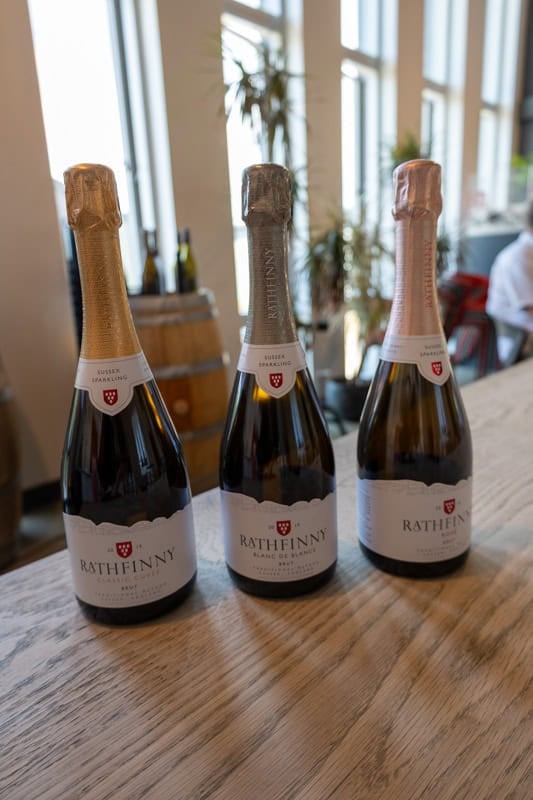
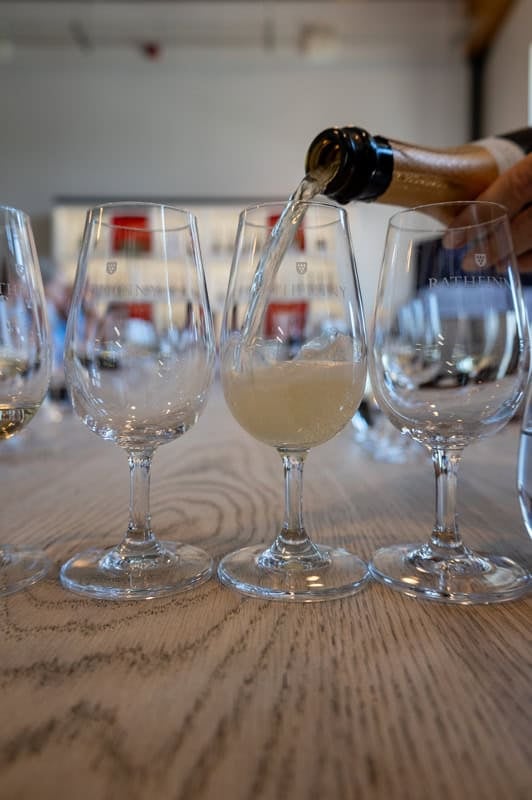
Instead, it’s an opportunity to learn more about English sparkling wine, ask questions and discover which styles you prefer. We tasted Rathfinny’s Classic Cuvee, Rose and Blanc de Blancs, all bottled in 2019.
And there’s something particularly satisfying about sipping a glass of sparkling wine having walked through the very vineyard where the grapes were grown.
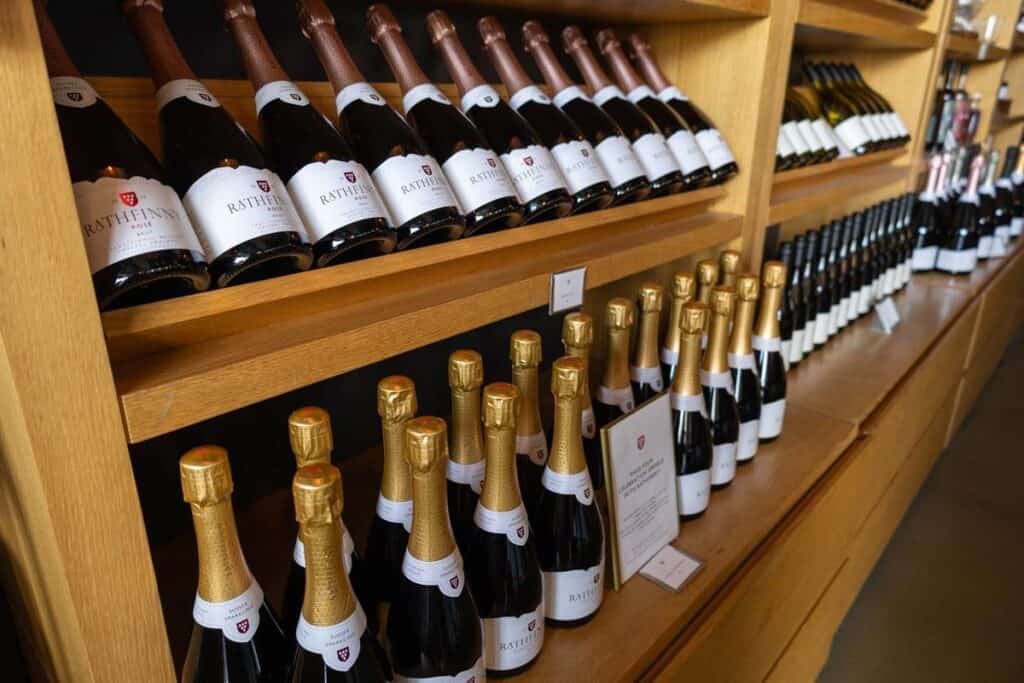
The cost of the tour includes a 10% discount applied to purchases at the Cellar Door. We may have bought a bottle of two to enjoy at home. And the shop sells local artisan food good and wine themed gifts and homeware as well as Rathfinny wine, gin and brandy.
Sussex and English Sparkling Wine
Sussex has become one of England’s most important wine-producing regions.
The county’s chalk soils, climate and long growing season provide excellent conditions for producing grapes for sparkling wine.
The same band of chalk that runs beneath parts of the Champagne region extends across the English Channel and into southern England, helping make Sussex particularly well suited to growing Chardonnay, Pinot Noir and Pinot Meunier.
Today, there are vineyards scattered across both East and West Sussex, producing internationally recognised still and sparkling wines. If you’d like to discover more local vineyards you might like to read my round-up of some of my favourite Sussex vineyards.
Rathfinny is one of the largest and best-known estates and has played an important role in raising the profile of Sussex sparkling wine both in the UK and overseas.
What is the Sussex Wine PDO?
In 2022, Sussex became the first wine region in England to be awarded Protected Designation of Origin (PDO) status, putting Sussex wine alongside some of the world’s best-known regional food and drink products.
The designation protects the name Sussex when it is used on qualifying still and sparkling wines and sets strict standards governing where the grapes are grown, the grape varieties that can be used, natural sugars and how the wines are produced.
To carry the Sussex PDO designation, wines must be made from grapes grown in East or West Sussex and meet defined quality and production standards.
Rathfinny was one of the driving forces behind the campaign to secure PDO status for Sussex wine, helping to establish the county as a distinct wine-producing region in its own right.
For visitors, it adds another layer of interest to a vineyard tour. The landscape, climate and chalk soils you see while walking through the vines aren’t simply part of the scenery; they’re an integral part of the identity and character of Sussex wine.
Eating at Rathfinny
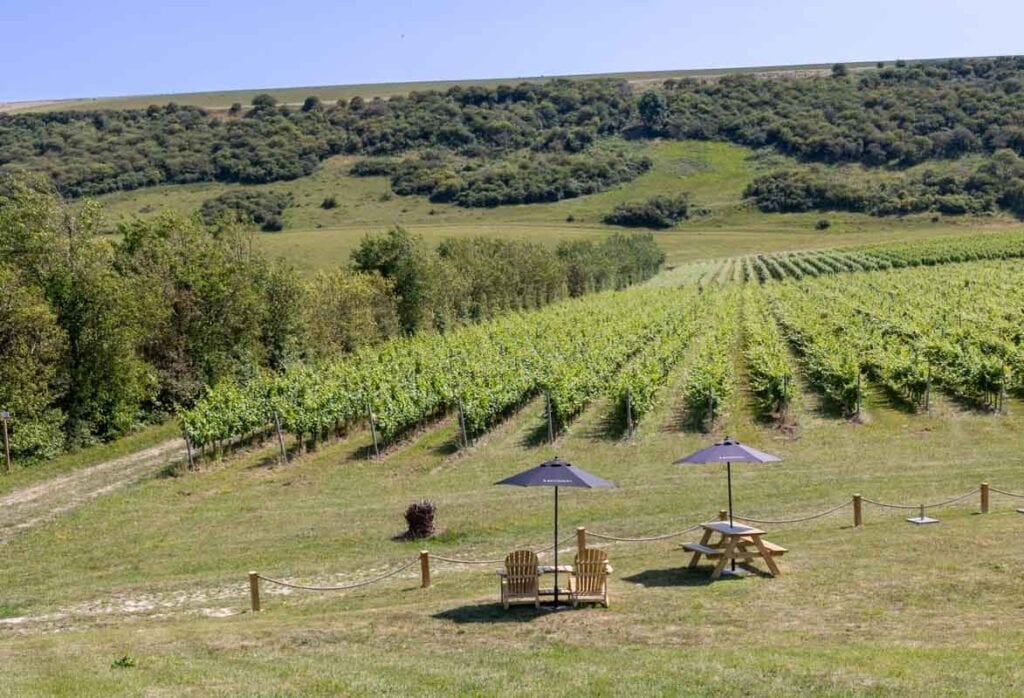
If you’d like to extend your visit, there are options for eating and drinking at the estate.
You can book a Vineyard Picnic or enjoy something from the estate’s outdoor wine bar, The Hut. It’s a lovely spot to enjoy a glass of Rathfinny wine and something to eat while taking in the views which are stunning. We treated ourselves to a ploughmans with Sussex Charmer cheese, local ham and a delicious locally produced pickle.

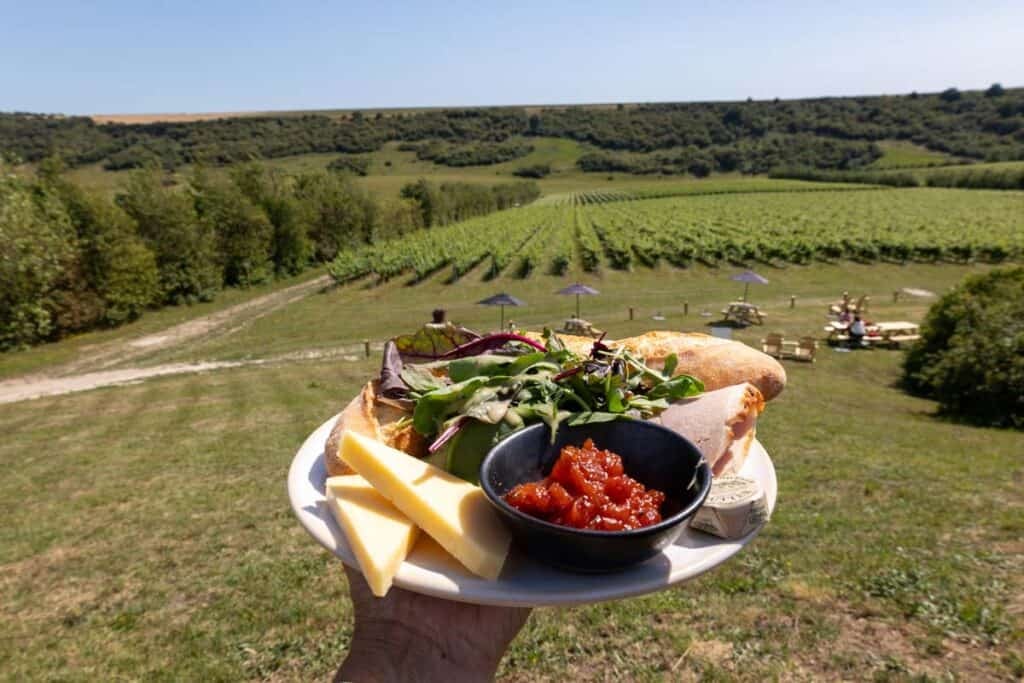
Opening times and dining options vary throughout the year, so it’s worth checking ahead and booking if you plan to eat during your visit.
The Rathfinny Trail
If you’ve got time I’d suggest going for the wine tour and tasting and then following the Rathfinny Trail around the estate. You’ll see some beautiful views and hopefully spot some wildlife. Check the chalk board on ‘The Hut’ which lists recent sightings.
When we visited early July they’d chalked up over 20 wildlife sightings including skylarks, hare, kestrel and red kites. While we were enjoying our ploughmans we saw a young, very healthy looking fox skirting the undergrowth.
Things to do nearby
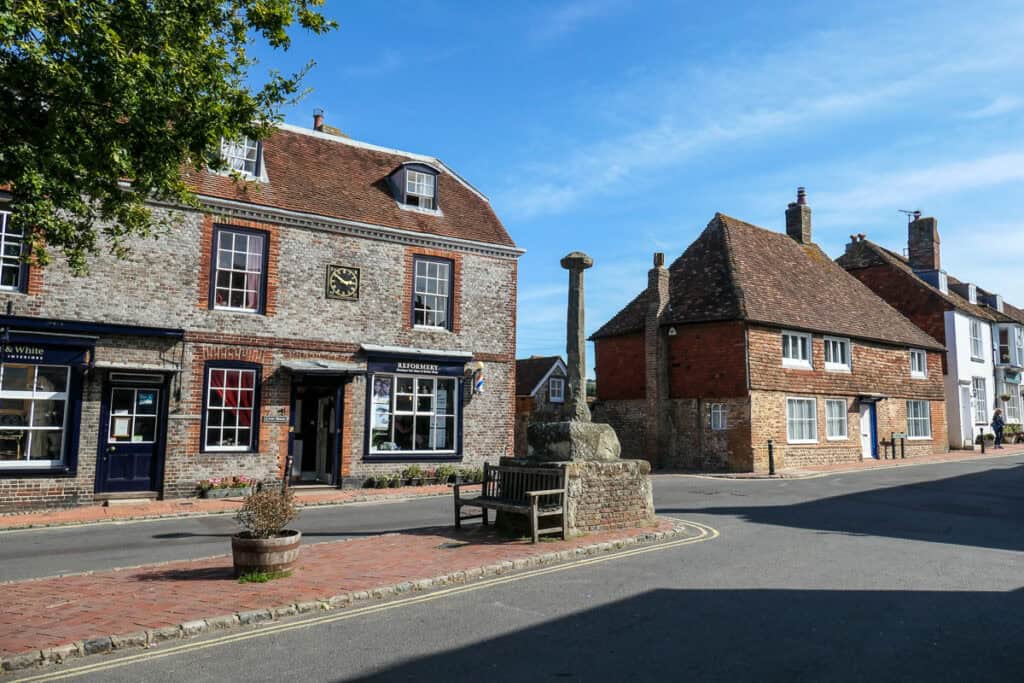
The village of Alfriston, one of the prettiest Sussex villages, and one of my favourites is a short walk from the Estate. There are some lovely shops, pubs and tea rooms in Alfriston and you could easy spend a few hours there.
Alfriston is on The South Downs Way so there’s some great hiking from the village. Head south following the Cuckmere river down to Cuckmere Haven. From there you can walk the iconic Seven Sisters Cliffs but you’ll need to be on the right side of the river or stay on the Seaford side to see the Coastguard Cottages. Find out more about the Seven Sisters Country Park and how to visit.
Staying at Rathfinny Wine Estate
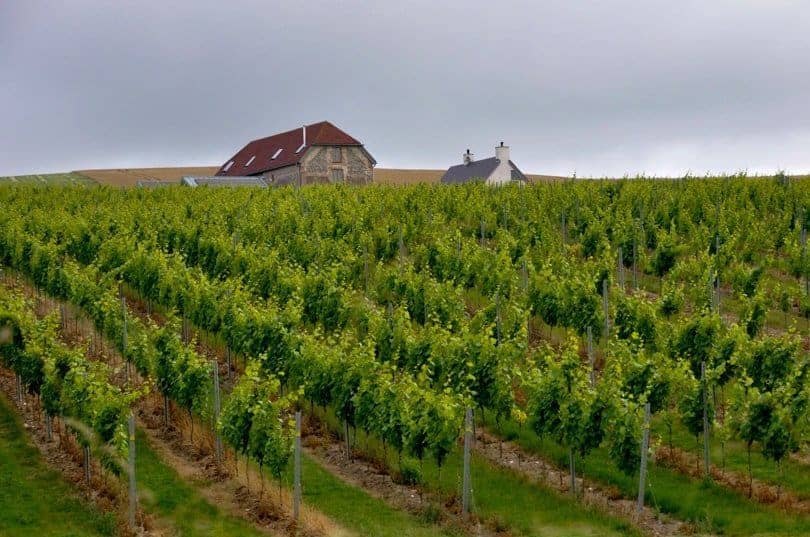
You can also turn your vineyard visit into an overnight stay.
Flint Barns offer accommodation within the estate, surrounded by the peaceful Sussex countryside and within walking distance of the vineyard and winery.
We stayed at Flint Barns during an earlier visit to Rathfinny and waking up in the middle of the estate added another dimension to the experience. The rooms are fairly small but more than comfortable and an excellent breakfast is served in the morning.
It’s a particularly appealing option if you’re planning a special occasion or simply want to enjoy the wines without having to think about driving home afterwards.
Other options for accommodation in the village are The Star owned by Alex Polizzi, The Alfriston and Wingrove House, all beautiful hotels in nearby Alfriston villages. There are also a number of cottages and holiday lets available to rent in the village.
Is the Rathfinny Vineyard Tour Worth It?
Rathfinny is one of those Sussex places that manages to combine a beautiful setting with a thoroughly enjoyable and interesting experience.
The vineyard tour gives you a fascinating insight into the work involved in growing grapes and producing English sparkling wine, while the tasting brings everything together at the end.
What I particularly enjoyed was seeing the scale of the estate from different perspectives: the sweeping views across the vines as we arrived, walking between the rows of vines and then seeing the production process inside the winery. But the wine tasting was the best bit
Whether you’re already interested in English wine or simply looking for a different day out in East Sussex, a Rathfinny vineyard tour and wine tasting is a thoroughly enjoyable way to spend a few hours.
And, of course, finishing your visit with a glass of Sussex sparkling wine overlooking the vines is a lovely way to end your visit.
How to Visit Rathfinny Wine Estate
Address: Rathfinny Wine Estate, Alfriston, Polegate, East Sussex BN26 5TU
Rathfinny is located close to the village of Alfriston in East Sussex, within the South Downs National Park.
The easiest way to reach the estate is by car. From the A27, follow signs towards Alfriston and continue through the village. The entrance to Rathfinny Wine Estate is clearly marked from the road.
There is parking available at the estate.
Vineyard tours and wine tastings should be booked in advance, particularly during weekends and the busy summer months.
If you’re planning to stay overnight at Flint Barns, advance booking is recommended.
Getting to Rathfinny
By Car
From London take the M25 and the A27. Exit the A27 to Alfriston on Alfriston Road (direction Drusilla’s Zoo). Drive through Alfriston village passing The Alfriston Hotel on your left and Riverdale House B&B on your right. 50 metres after Riverdale House you’ll see Rathfinny’s driveway and entrance to your right. Look out for the grass Rathfinny logo and shield.
By Train
From London Victoria the fastest journey is around two hours, changing train in Brighton for Seaford and then a 10-minute transfer by taxi or the local 119 bus heading towards Alfriston. Alternatively, Polegate station is a 15-minute taxi transfer.
Pin for Later